☀️ UPF 50+ Sun protection for more fun in the sun
☀️ UPF 50+ Sun protection for more fun in the sun
Accessories
Check out our full lineup of yoga accessories to help you with your daily meditation practice and fitness goals...
Try our new Cork Yoga Brick for soft but solid support
Check out our full lineup of yoga accessories to help you with your daily meditation practice and fitness goals...

Reusable Swim Nappies vs Disposable: Which Is Better for Baby’s First Pool Visit?
6 min read
Your baby’s first visit to the pool is a lovely milestone.
It can also involve a surprising amount of preparation. Along with towels, dry clothes and snacks, you will need to think about what your baby wears beneath their swimsuit.
Most babies and toddlers who are not fully toilet trained need a swim nappy. But should you choose a reusable or disposable one?
Both are designed for use in water, but they differ in fit, materials, cost, convenience and environmental impact.
Here is what parents need to know.
What Is a Swim Nappy?
A swim nappy is designed to help contain solid bowel movements while a baby or toddler is in the water.
Unlike an everyday nappy, a swim nappy should not absorb a large volume of liquid. If it did, it would absorb pool or sea water, becoming heavy, swollen and uncomfortable.
This means swim nappies are not designed to contain urine in the same way as an ordinary nappy before entering the pool.
Change your child into their swim nappy shortly before swimming. After leaving the water, remove it and replace it with a dry everyday nappy.
Why Do Pools Require Swim Nappies?
Swim nappies help reduce the chance of faecal matter entering the pool.
However, no swim nappy can guarantee that contamination will never occur. A secure fit and prompt nappy changes are important.
Children should not swim if they have diarrhoea or have recently been unwell with it. Families should also wash their hands with soap and water after changing a nappy.
Check your local pool’s rules before visiting. Some swim schools require a reusable swim nappy. Others ask children to wear two layers, such as a disposable swim nappy beneath a fitted reusable style.
What Is a Disposable Swim Nappy?
A disposable swim nappy is made for one swimming session and is thrown away after use.
It usually has:
-
A lightweight absorbent core
-
Elastic around the waist and legs
-
Tear-away or pull-on sides
-
Single-use materials
-
Age or weight-based sizing
Disposable swim nappies can be purchased in packs from supermarkets, chemists and baby stores.
Benefits of Disposable Swim Nappies
They are convenient for occasional use
A disposable option may suit a family taking an unexpected pool visit or swimming only once while travelling.
There is no washing
After swimming, the nappy can be wrapped and placed in an appropriate bin.
They are widely available
Disposable swim nappies are relatively easy to find when you are away from home.
Things to Consider With Disposable Swim Nappies
They create repeated waste
Each nappy is used once before being discarded. For children who attend weekly lessons, the number of nappies can add up quickly.
You need to keep buying them
A pack may appear inexpensive, but the total cost grows with repeated use.
Sizing may be less flexible
Babies do not always fit neatly within a weight range. A disposable swim nappy might gap at the legs or feel tight around the waist.
They still need a secure fit
A disposable nappy is not automatically leakproof. Check the leg openings and waistband before your baby enters the water.
What Is a Reusable Swim Nappy?
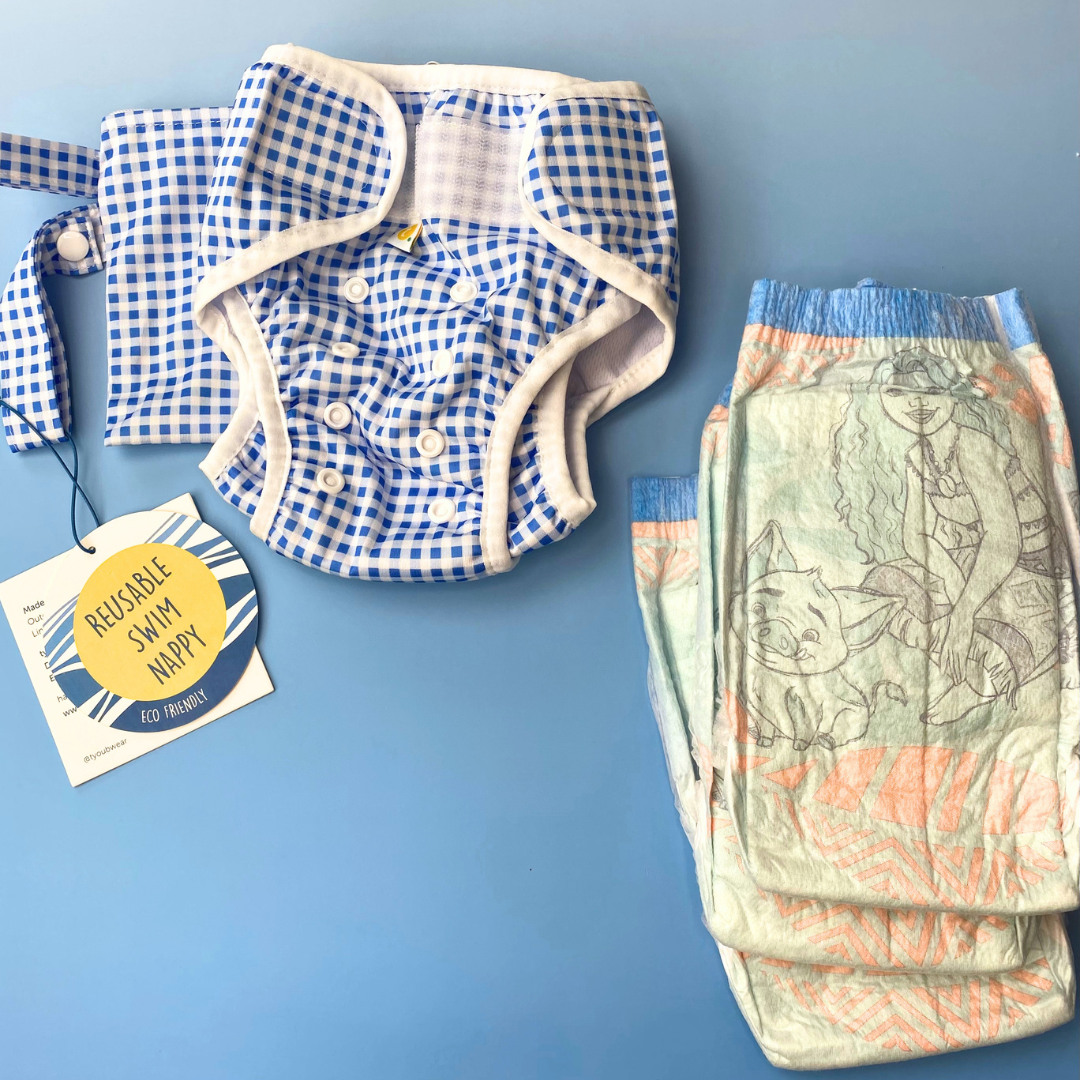
A reusable swim nappy is a washable garment designed to be worn repeatedly.
Depending on the design, it may include:
-
A lightweight inner layer
-
A water-resistant outer layer
-
Elasticated leg openings
-
An adjustable waistband
-
Press studs or side fastenings
-
A double leg gusset
-
Adjustable sizing for growth
After swimming, the nappy is rinsed, washed according to its care instructions and used again.
Benefits of Reusable Swim Nappies
They can be used repeatedly
One reusable swim nappy may be worn throughout swimming lessons, family holidays and summer pool visits.
They can reduce single-use waste
Washing and reusing the same garment means fewer disposable nappies are sent to landfill.
Adjustable styles can grow with your child
Press studs or adjustable waist settings can help parents achieve a closer fit as their baby grows.
They often feel more like swimwear
A soft, lightweight reusable nappy can be worn on its own or beneath a sunsuit, depending on the pool’s requirements.
Side fastenings can simplify messy changes
A nappy that opens at the sides can be removed without pulling it down the child’s legs.
Things to Consider With Reusable Swim Nappies
They need to be washed
Reusable nappies require rinsing, washing and drying between visits.
You need somewhere to store the wet nappy
A waterproof wet bag helps keep damp items separate from clean clothes.
The initial cost is higher
A reusable nappy generally costs more upfront than one disposable nappy. Its value comes from being used many times.
Fit is still essential
Adjustability is helpful, but parents must check the waistband and legs each time.
Reusable vs Disposable Swim Nappies at a Glance
| Feature | Reusable swim nappy | Disposable swim nappy |
|---|---|---|
| Number of uses | Designed for repeated wear | Single use |
| Washing required | Yes | No |
| Waste created | Lower with regular reuse | One nappy discarded per use |
| Upfront cost | Usually higher | Usually lower |
| Ongoing cost | Usually lower with frequent swimming | Continues with every new pack |
| Adjustability | Often adjustable | Usually fixed by size or weight |
| Travel convenience | Needs washing or storage | Easy to dispose of where permitted |
| Appearance | Often resembles swimwear | Usually worn underneath swimwear |
| Best suited to | Lessons and regular swimming | Occasional or emergency use |
Which Is Better for Swimming Lessons?
For regular weekly lessons, a reusable swim nappy is often the more practical choice.
You can keep it packed with your child’s swimming gear, wash it after the lesson and use it again the following week.
An adjustable design may also remain useful through several stages of growth.
Some parents choose to own two reusable swim nappies. This provides a spare when one is being washed, drying or unexpectedly soiled.
Which Is Better for Travel?
The answer depends on your destination.
A reusable swim nappy can be ideal when your accommodation has laundry facilities. It takes up little space and can be worn throughout the holiday.
Disposable swim nappies may be convenient when:
-
Laundry access is limited
-
You are moving between destinations
-
Drying conditions are poor
-
You need an emergency spare
A combination can work well too. Pack a reusable nappy as your main option and one or two disposables as backups.
How Should a Swim Nappy Fit?
A swim nappy should sit securely around the waist and legs without digging into the skin.
Check for:
-
No obvious gaps around the thighs
-
A waistband that remains in place
-
Enough room for comfortable movement
-
No deep pressure marks
-
No sagging when wet
Move your baby’s legs gently and make sure the openings remain secure.
The right fit is more important than whether the nappy is reusable or disposable.
What to Pack for Baby’s First Pool Visit
Bring:
-
A spare swim nappy
-
A baby sunsuit or swimsuit
-
Two towels
-
A waterproof wet bag
-
A dry everyday nappy
-
A complete change of clothes
-
A warm layer for afterwards
-
Feeding supplies
-
Any toiletries required by the pool
Keep the first visit short and relaxed. Babies can become tired or cold quickly.
Our Verdict
For families who swim regularly, a well-fitting reusable swim nappy offers excellent long-term practicality.
It can reduce ongoing purchases, minimise single-use waste and become a familiar part of your child’s swimming routine.
Disposable swim nappies can still be useful for occasional visits and travel emergencies. The most important factors are a secure fit, careful hygiene and following the requirements of the pool or swim school.
A Reusable Swim Nappy Made for Real Babies
The Tyoub Reusable Swim Nappy is designed to grow with babies and toddlers from approximately birth to three years.
It features adjustable front press studs, secure leg openings and convenient side fastenings for easier changes. Its lightweight construction is designed for the water without unnecessary bulk.
Each swim nappy comes with a useful wet bag, giving parents somewhere to place damp swimwear after lessons.
Choose a reusable swim nappy you can appreciate for its fabric, fit and workmanship. It is a practical way to treasure your child’s first swimming experiences while reducing avoidable disposable waste.
Subscribe
Sign up to get the latest on sales, news blogs and more …
Premium. Ethical. Sustainable. Kids. Swimwear.
Tyoub, eco-friendly swimwear brand based in Melbourne, Australia. Offering reusable swim nappies for toddlers and babies. The best bathers and swim togs for children. Year round swim essentials to help parents navigate weekly swimming lessons and hassle free holidays. Conscious swimwear made with recycled polyester motivated by marine conservation.